Why a Ryokan with Onsen Is the Ultimate Digital Detox — Cultivate mindfulness through your stay
The research on nature immersion and nervous system regulation is compelling. Shinrin-yoku (forest bathing) and Hot spring bathing have strong evidence behind it, particularly for reducing stress and improving sleep quality.
Spas and meditation apps can take you so far. Here's what happens when you go all the way.
Reading time: 6 min Category: Wellness Travel Author: Miho Hatanaka
There is a specific kind of tired that comes from being constantly reachable. It's not the tired that sleep fixes. It's the background hum of a mind that has never, in recent memory, been fully offline.
You've probably tried the solutions available to you at home. A meditation app with a streak you're quietly proud of. A yoga retreat in the mountains. All inclusive vacation on a beach. And they help — until Monday morning, when the emails start again and the mental noise returns like it never left.
What most digital detox experiences miss is this: your environment shapes your nervous system. You cannot genuinely restore in a place that looks and feels like the life you're trying to step back from.
Shuzenji, Izu - known for its natural hot springs that heals
What Makes a Ryokan Different
A ryokan (旅館) is a traditional Japanese inn — but describing it that way is like describing a kaiseki meal as "food." It undersells what happens there by about a thousand percent.
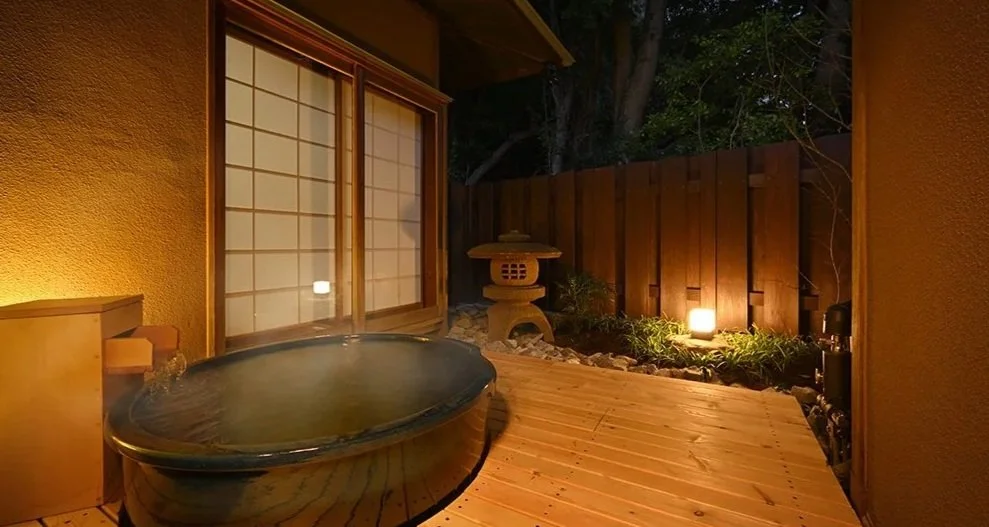
The architecture is built on intentionality: tatami floors, sliding shoji screens, circular window that peeks at meticulously tended Japanese gardens. The pace is unhurried by design and simple without clutter. Meals are ceremonial events that honor seasonality and craft. And the onsen — natural geothermal hot springs — are not an amenity. They are a daily ritual to embody, as central to Japanese wellness culture as morning shower is to ours.
When you step into a ryokan, particularly one in an authentic setting like Shuzenji in the Izu Peninsula, something shifts. The visual noise disappears. The inputs slow down. Your body — which has been in low-grade fight-or-flight for longer than you realize — begins to exhale.
"The onsen doesn't ask anything of you. It just holds you. And sometimes, that is the whole point."
The Science Behind Why This Works
The research on nature immersion and nervous system regulation is compelling. Shinrin-yoku (forest bathing), a practice developed in Japan in the 1980s and now extensively studied, has been shown to lower cortisol, reduce blood pressure, and improve mood — effects that persist for days after the experience.
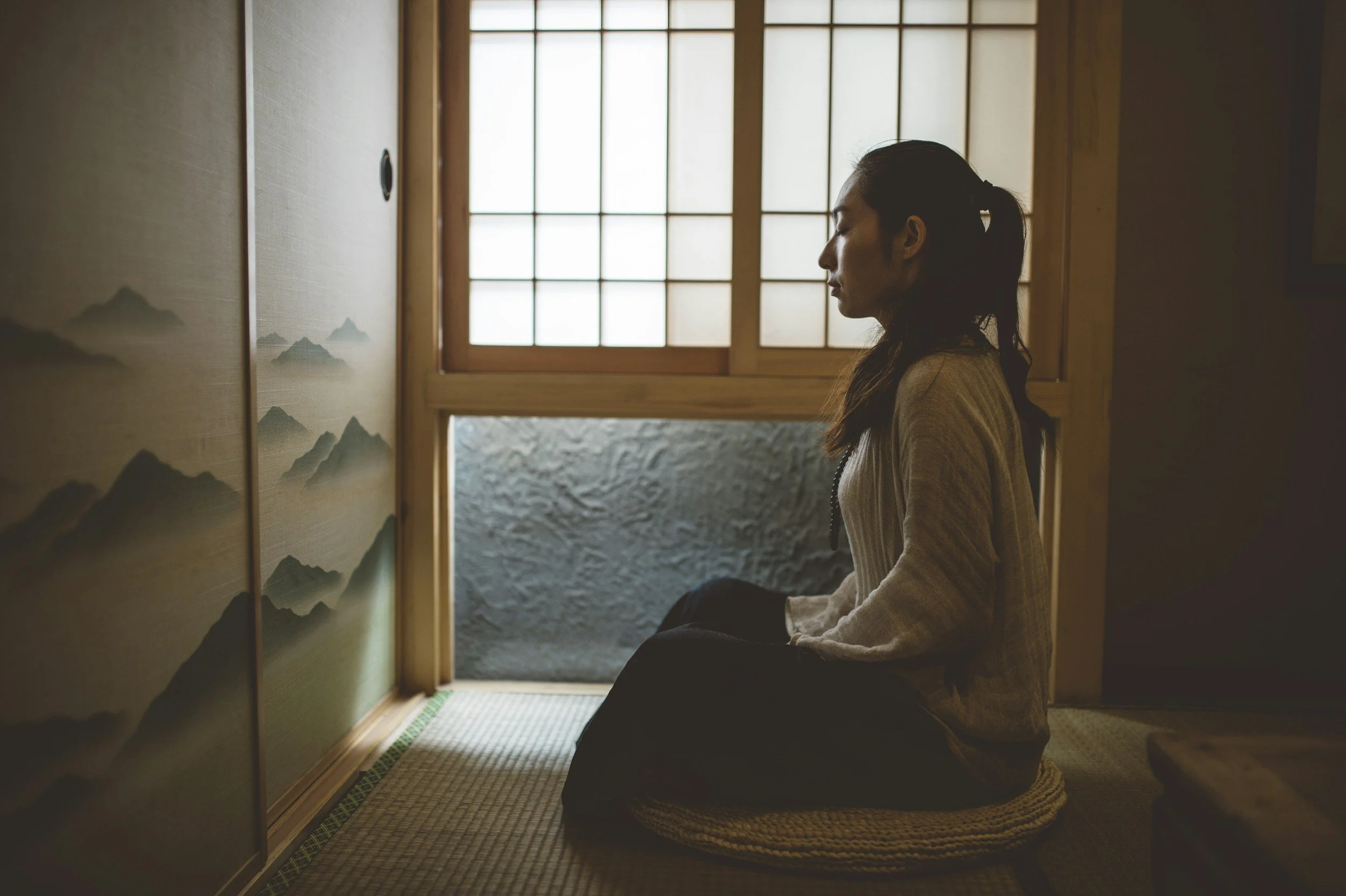
Hot spring bathing (balneotherapy - treatment of disease with bathing in mineral springs) has similarly strong evidence behind it, particularly for reducing stress markers and improving sleep quality. And contemplative practices like zazen meditation — practiced in the quiet of an ancient temple rather than a WeWork wellness room — produce measurable changes in brain activity associated with calm and clarity.
Japan didn't stumble into these practices. They've been refined over millennia, specifically because they work.
What Five Days in a Ryokan Actually Does to Your Mind
Guests who have experienced extended ryokan stays consistently describe a specific progression. The first day, the mind races — reaching for the phone, mentally composing emails that don't need to be sent. By day two, something loosens. By day three or four, many people report a quality of attention they haven't felt in years: genuinely absorbed in what's in front of them, unbothered by what's back home.
This is what happens when a well-designed environment removes the triggers of distraction and replaces them with beauty, slowness, and sensory richness that genuinely captures attention.
Our Retreat: Designed Around These Principles
The House Nine Japan Wellness Retreat — November 9–14, 2026 — is hosted at a five-star luxury ryokan in Shuzenji, Izu, a two-hour drive from Tokyo during peak autumn foliage season. We have exclusive use of the property for our group, meaning you won't be navigating tourist crowds. Every room has its own private in-room onsen, a curated view of a Japanese garden, and western beds in traditional tatami settings.
The programming is built around the natural rhythms of the ryokan day:
Mornings: Gentle intention-setting, zazen meditation, and unhurried Japanese breakfast
Days: Curated excursions — temple visits, Mt. Fuji foothills, Shizuoka tea fields, Shinto shrines
Evenings: Private onsen soaks, multi-course kaiseki dinners, and reflective journaling
There is no hurried schedule, no competitive energy, no pressure to perform wellness, only to experience them. The retreat is designed to be spacious — to give you room to actually drop in.
Who Makes the Most of This Experience
The guests who get the most from this retreat are typically people in their late 30s and 40s who work hard, travel well, and know the difference between a luxury vacation and genuine restoration. You may be living in a busy environment like San Francisco, Seattle, New York, Singapore, Sydney, London, and Taipei. They've been to Japan before, or they've always wanted to go — but they want to experience the country slowly, with a guide who knows it from the inside.
They will come home after the experience; restored and learning new ways to incorporate mindfulness in daly lives.
Reset your nervous system at our Ryokan.
Five days. A luxury ryokan. Private onsen. Japan in peak autumn. A small, intentional group. November 9–14, 2026 — spots are limited to 9 rooms.