
I spent seven days walking the retreat route. Here is everything I experienced.
Reading time: 7 min Category: Wellness Retreat Author: Miho Hatanaka
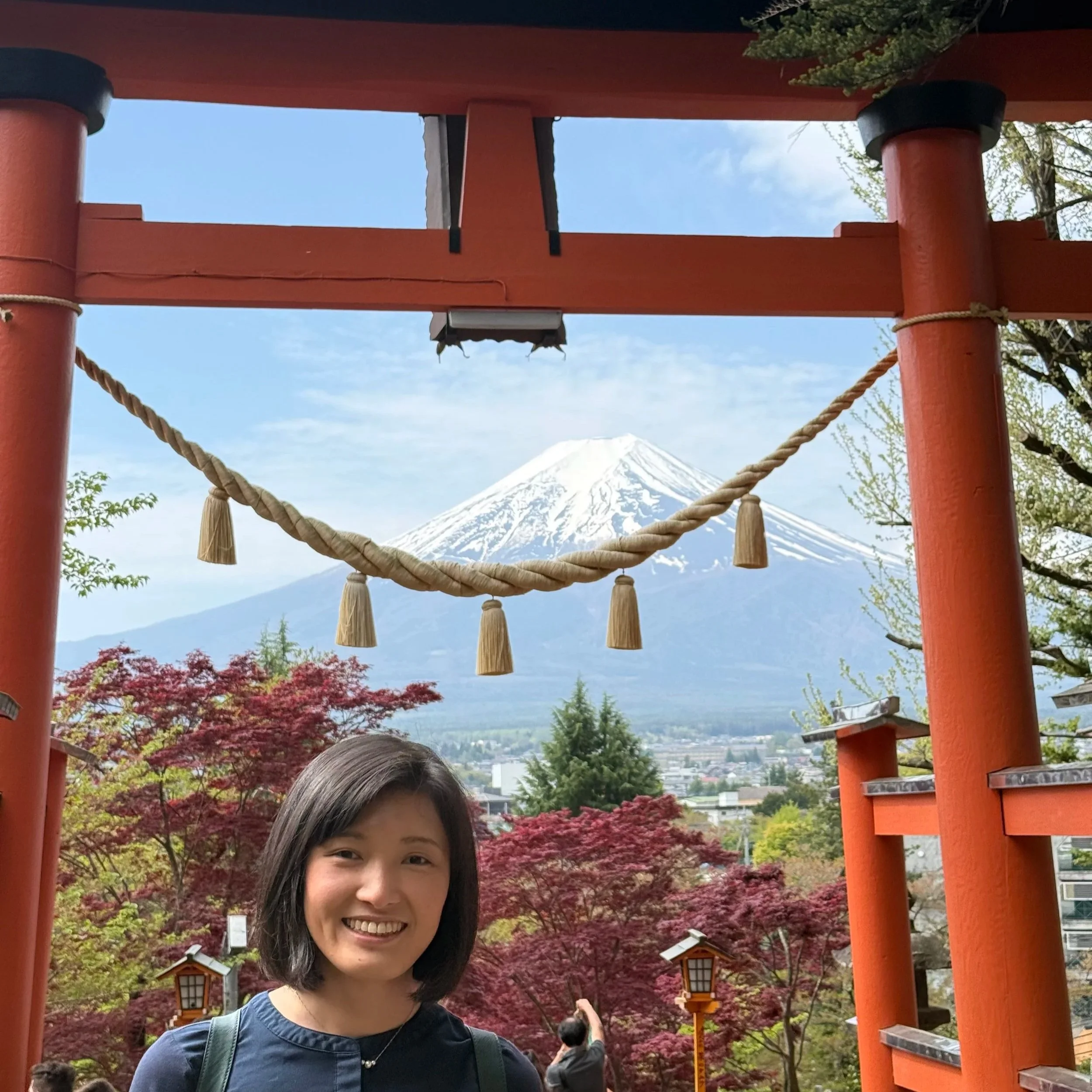
Miho at Arakurayama Sengen Shrine in Fujiyoshida - beautiful view of Mt. Fuji through the red torii Gate
Shuzenji, Shizuoka, Fujiyoshida
I spent seven days traveling through Shuzenji, Shizuoka, Fujiyoshida, and the foothills of Mt. Fuji to walk every path, meet every partner, and sit in every space of silence that our November guests will experience.
“What I found exceeded everything I had hoped for. The collection of places, people, and experiences we have curated for this retreat is something I genuinely believe most people, including even the local Japanese people, will never encounter in quite this way.”
I want to share with you what I’ve experienced.
Izu, Shizuoka
After a long day of flights and trains, I arrived in Shuzenji, Izu. I was tired to the bones after crossing the Pacific, the particular exhaustion of having left one world and not yet fully arrived in another.

Miho enjoying Kaiseki dinner.
The moment we reached the ryokan and were welcomed with a beautifully prepared Kaiseki dinner (traditional Japanese multi-course meal), something began to release. The ingredients spoke entirely of the season. I ate with more attention than I had given a meal in months.
The best part of the day is releasing all the aches and pains in their private in-room onsen (natural hot springs). I went to sleep earlier than I have in years.
That is what the ryokan does. It doesn't ask you to relax. It simply invites you and create the condition in which relaxation becomes inevitable.
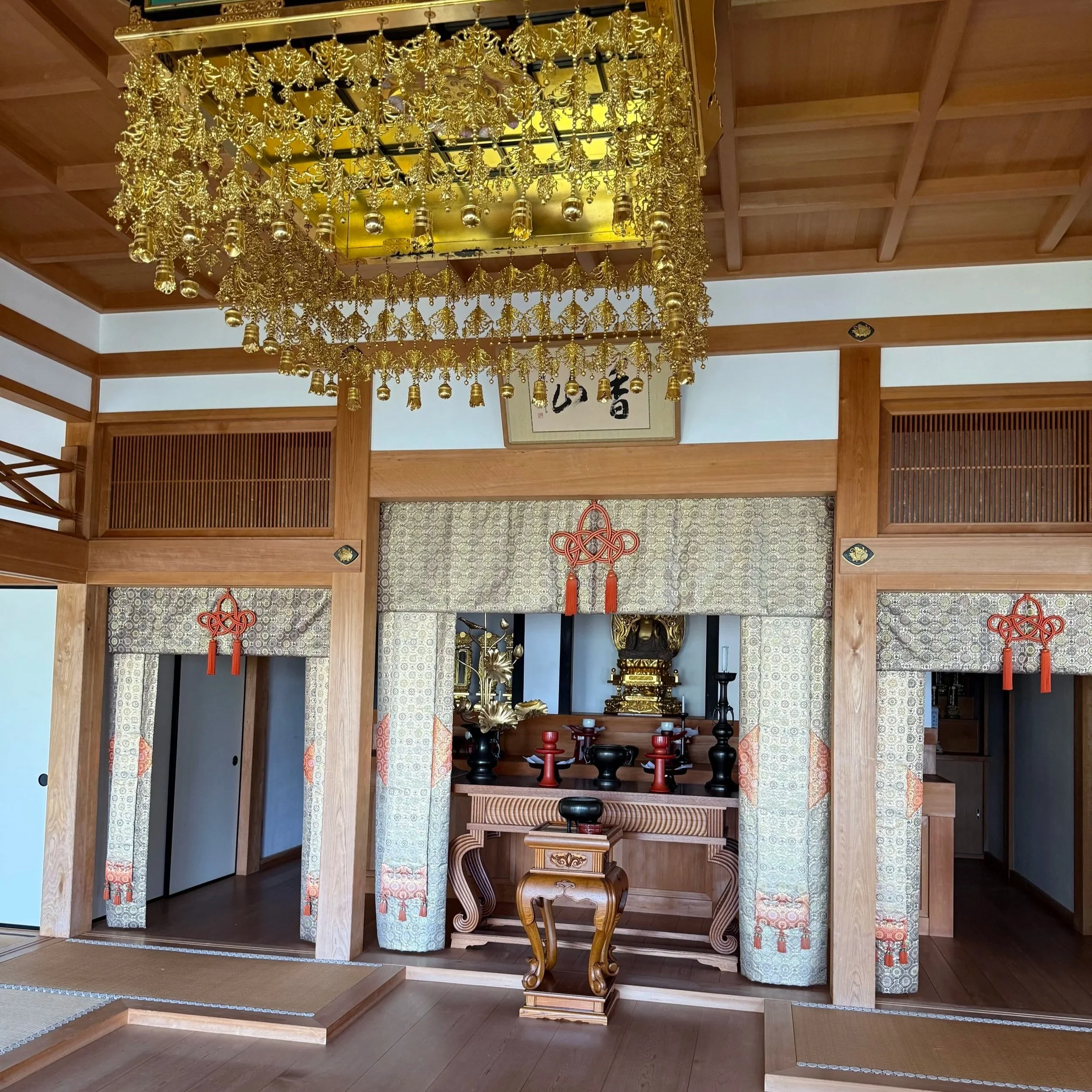
Inside the temple has a calm smell of incense.
Zazen Silent Meditation
We met Tomomi, our local guide, and began the day visiting the temple where our November guests will practice zazen - silent sitting meditation.
The temple sat above a valley with a meticulously cared-for garden and a temple building of real beauty. The monk there offers both Zazen - silent sitting meditation and Mokushoku - silent eating meditation. When Tomomi told me this, I felt the quiet click in my head. It is fits right in our retreat and something that guest cannot experience elsewhere. It will be one of the most memorable experiences of the retreat.
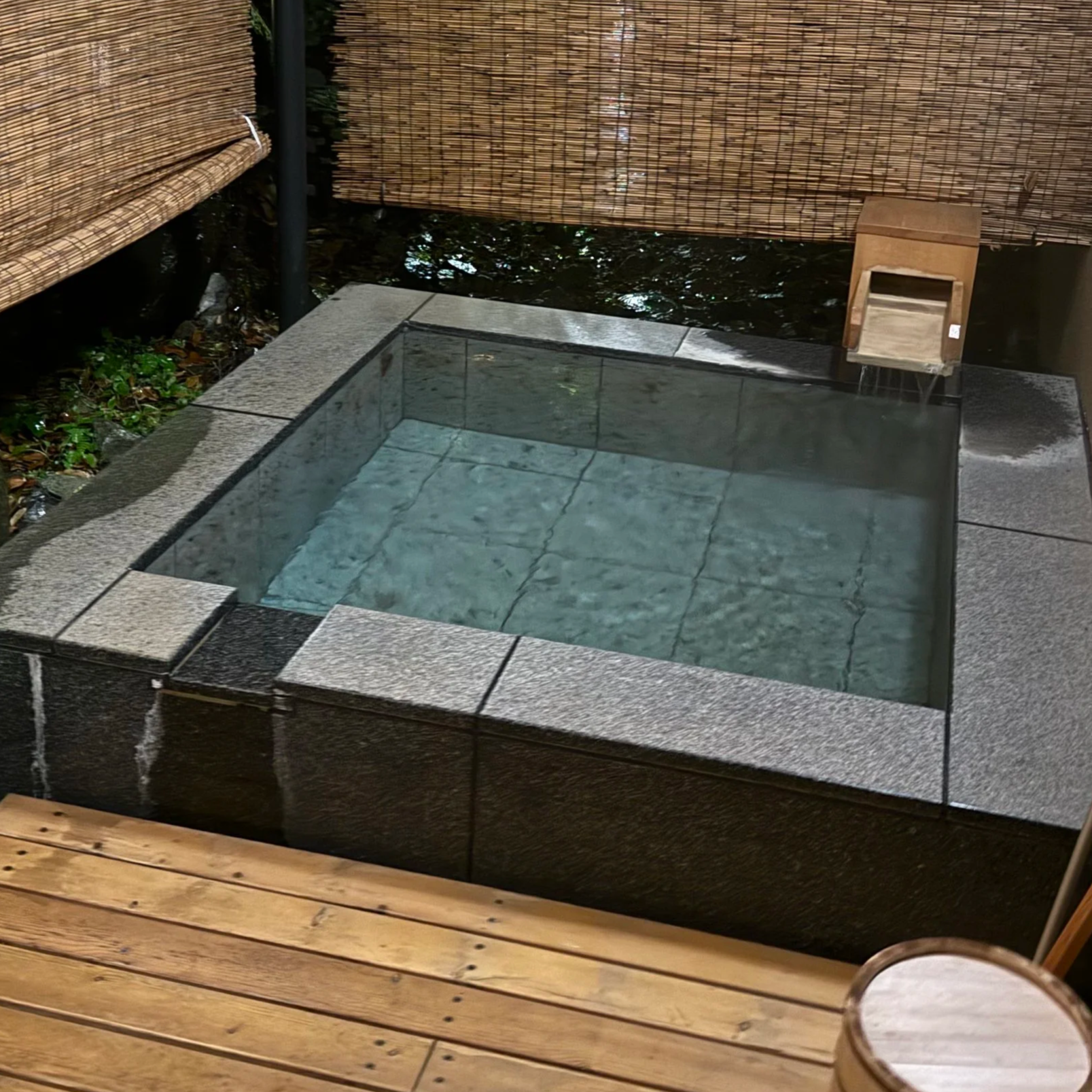
This Ryokan has a private onsen in every room.
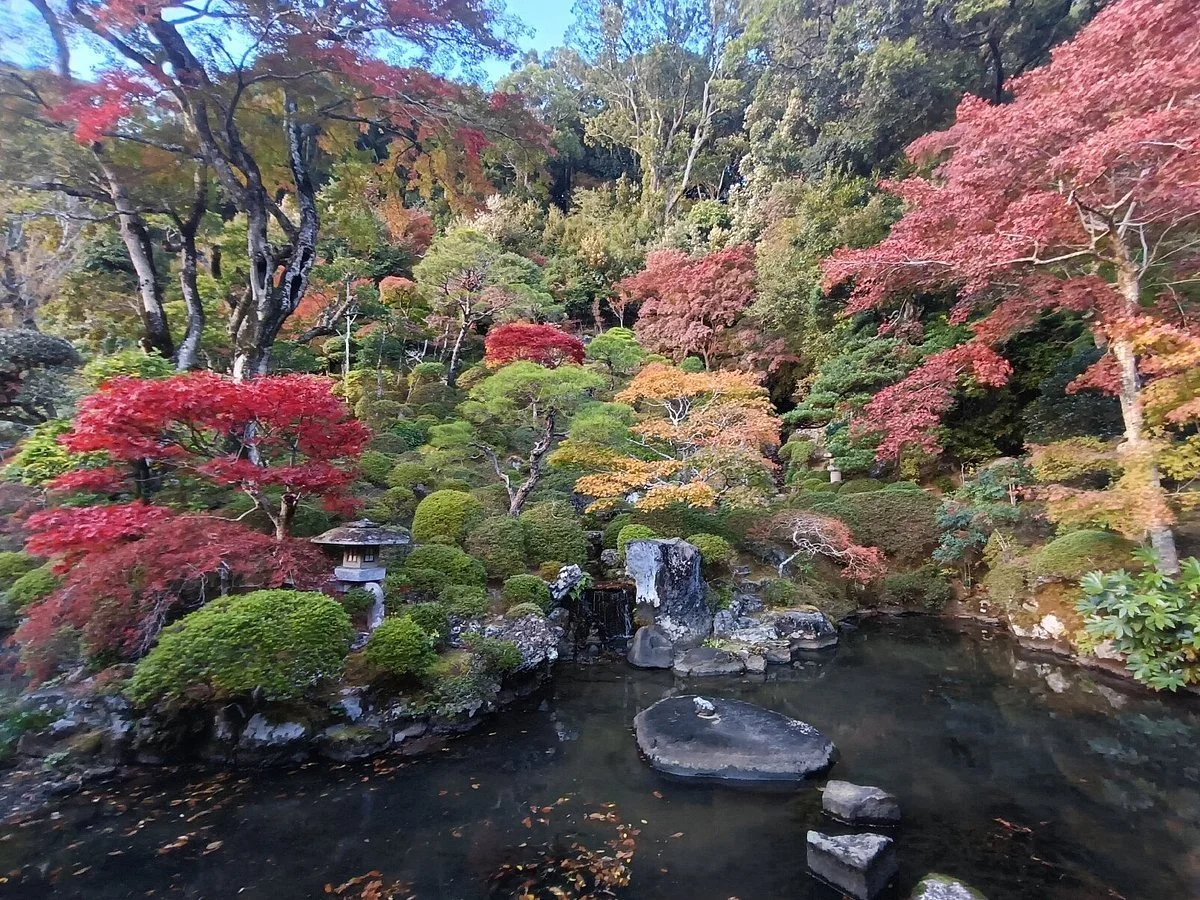
Tomomi also took us to Gomado — a smaller temple in the hills surrounding Shuzenji, said to be the place where Kukai (Japan’s most reverend monk in 800’s) himself first sat in meditation, beneath a waterfall. The sound of the river filled the space. Birds. Light through trees. Nature was abundant and creates the atmosphere of calm.
Lunch was soba with freshly grated wasabi — the real kind, grated at the table, nothing like the paste in the tube most people know.
That evening, again I soaked in the private in-room onsen at our villa. Forgot to mention that I soaked in the morning too. Coming from U.S. jetlag set me to wake up at 4 AM!
Wasabi Fields
A 40-minute taxi ride brought us to the wasabi fields. Keiko, the farmer's wife, was waiting for us. She doesn't speak English — but she had prepared a detailed printed slides explaining everything: how wasabi requires constant flowing fresh water and a stable water temperature year-round; how her family exclusively cultivates Mazama wasabi, a variety that takes two years to grow instead of one; how this cultivar accounts for only 15% of Japan's wasabi production, and precisely why it is worth the wait.
Standing in that field — surrounded by woods, by the sound of the river running through the cultivation beds, by the various shades of green in the forest.
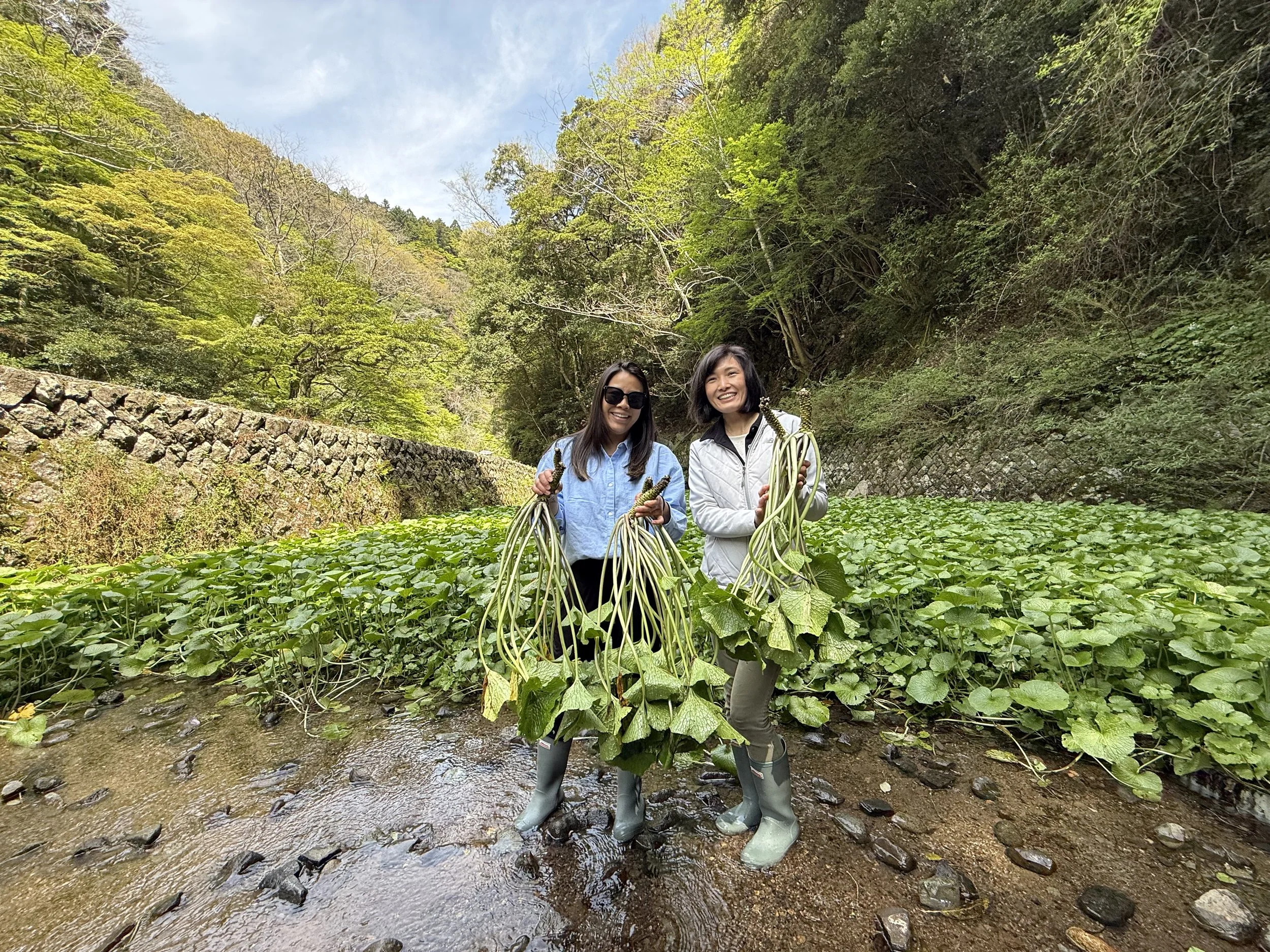
“Real wasabi is a relationship between land, water, and time. It is subtle. It is complex.”
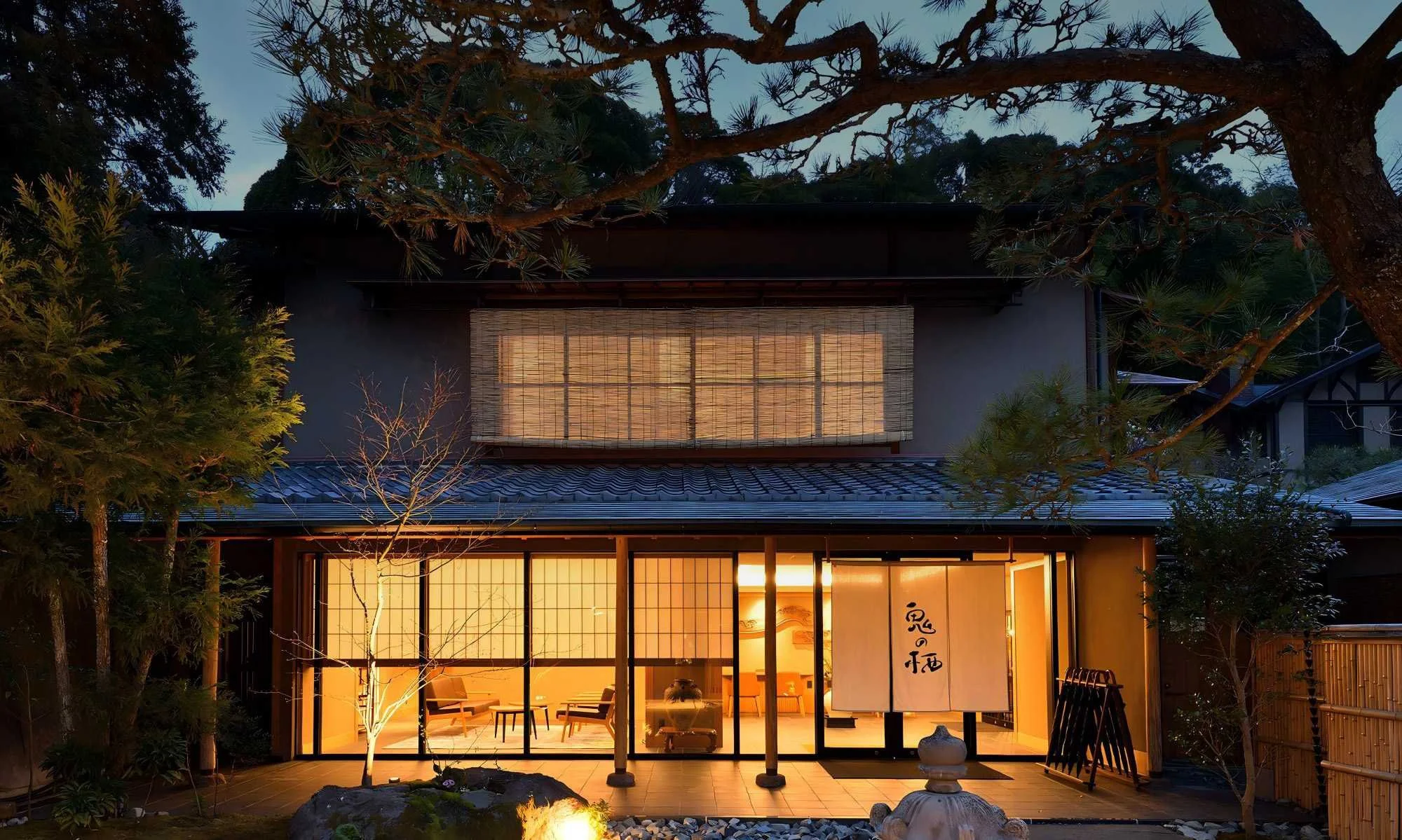
After lunch at a local organic restaurant serving entirely local ingredients, we returned to the ryokan. The manager took us on a tour of the property and shared some background of the ryokan that every room is named after a place in Kyoto, because Shuzenji is known as "Little Kyoto," a town of equivalent historical and cultural depth.
He also mentioned that the head chef at the ryokan pride himself in crafting the freshest and refined dining experience. We were escorted to the restaurant every meal by ryokan staff so that they can prepare our meal at a right time.
Tea Farm in Shizuoka
Before we left to Shizuoka, we decided to request a short tour of Shuzenji. Our guide Mrs. Shimura was born and raised in Izu — she has spent her career as a tour guide bringing Japanese tourists for international trips mostly in Europe. After retiring, her passion became sharing the history of her own home. She walked us through Shuzenji sharing the histories and significance of the area as someone who has known a place her whole life.
She showed us a ryokan that have been operating for 150 years, but people in Shuzenji calls them "a baby." The oldest ryokan in Shuzenji, has been operating for 500+ years - Asaba Ryokan. She showed us the hot spring that flows from the middle of the Katsura River — Tokko-no-Yu, the spring that Kukai is said to have struck from the riverbed in 807, the oldest hot spring in Izu (it is no longer open for soaking). But visitors can soak their feet for free at the open-air footbath along the river bank.
She told us that many royal families were exiled from Kyoto and settled in Shuzenji around 1200 AD. The first shogun of the Kamakura Shogunate met his wife, Hojo Masako, here, in Shuzenji, before moving east to build his empire. History in Japan is not distant. It is layered into the ground you walk on.
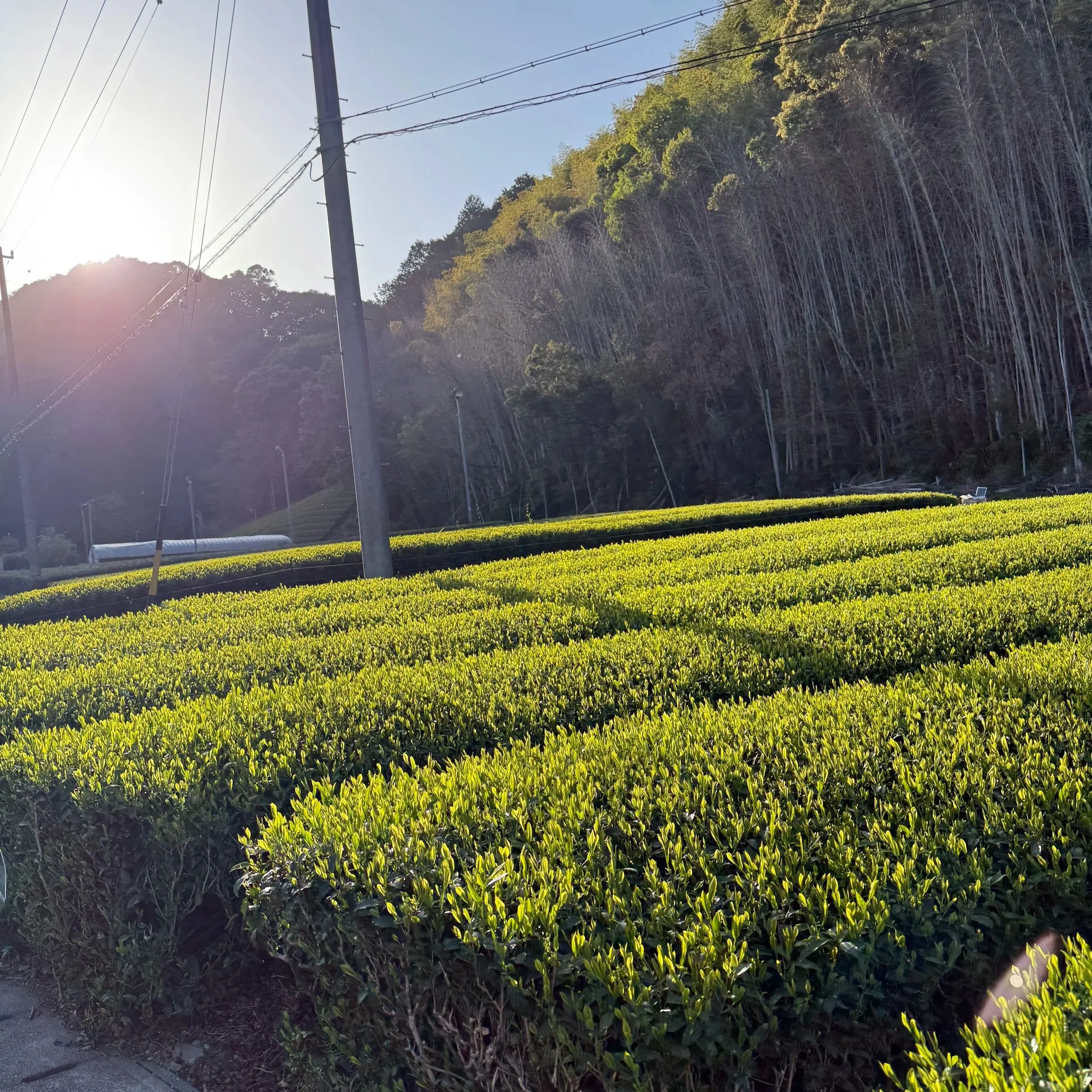
Tea farm at Moriuchi Seicha
In the afternoon, we took the train to Shizuoka — the great tea-producing region that supplies over 40% of Japan's green tea — and visited a farm that grows 20 different cultivars, producing sencha, oolong, and black teas. It’s rare to see a tea farm offering this many variety of teas. Walking past the processing facility, we were greeted by warm air and the fresh scent of steaming leaves. April is first harvest season, and the new buds were just ready to be picked. I stood next to a row of them and felt the real connection with the land and the local people who tends the farm.
一期一会 Unique Tea Experience
We visited another tea farm by Mt. Fuji.
In Japanese there’s a word "こだわり” a word that describes a blended attitude of commitment and obsession. This is what master craftsmen in Japan pride themselves on.
Mr. and Mrs. Kobayashi produce premium green tea: hand-picked only, harvested only once a year in April, from fields they tend with the devotion of people who understand that what they are growing is irreplaceable. Their traditional Japanese garden surrounds a tea room of extraordinary beauty and philosophical depth.
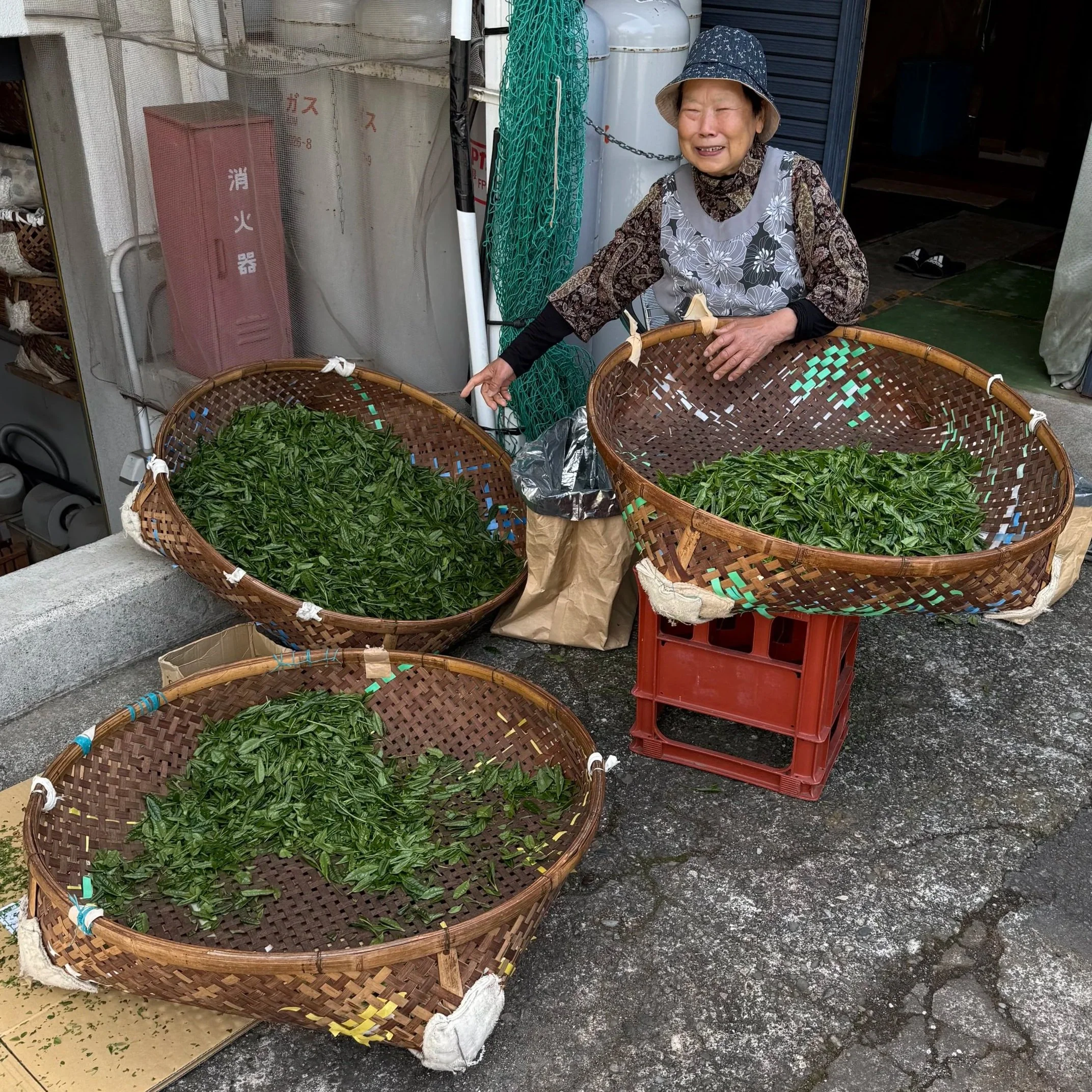
Average age of tea picker at Kobayashi’s Farm is 80 years old! They had 90 year old tea picker and most recently the youngest - 40 year old joined and Mrs. Kobayashi was thrilled to have younger generation joining the workforce.
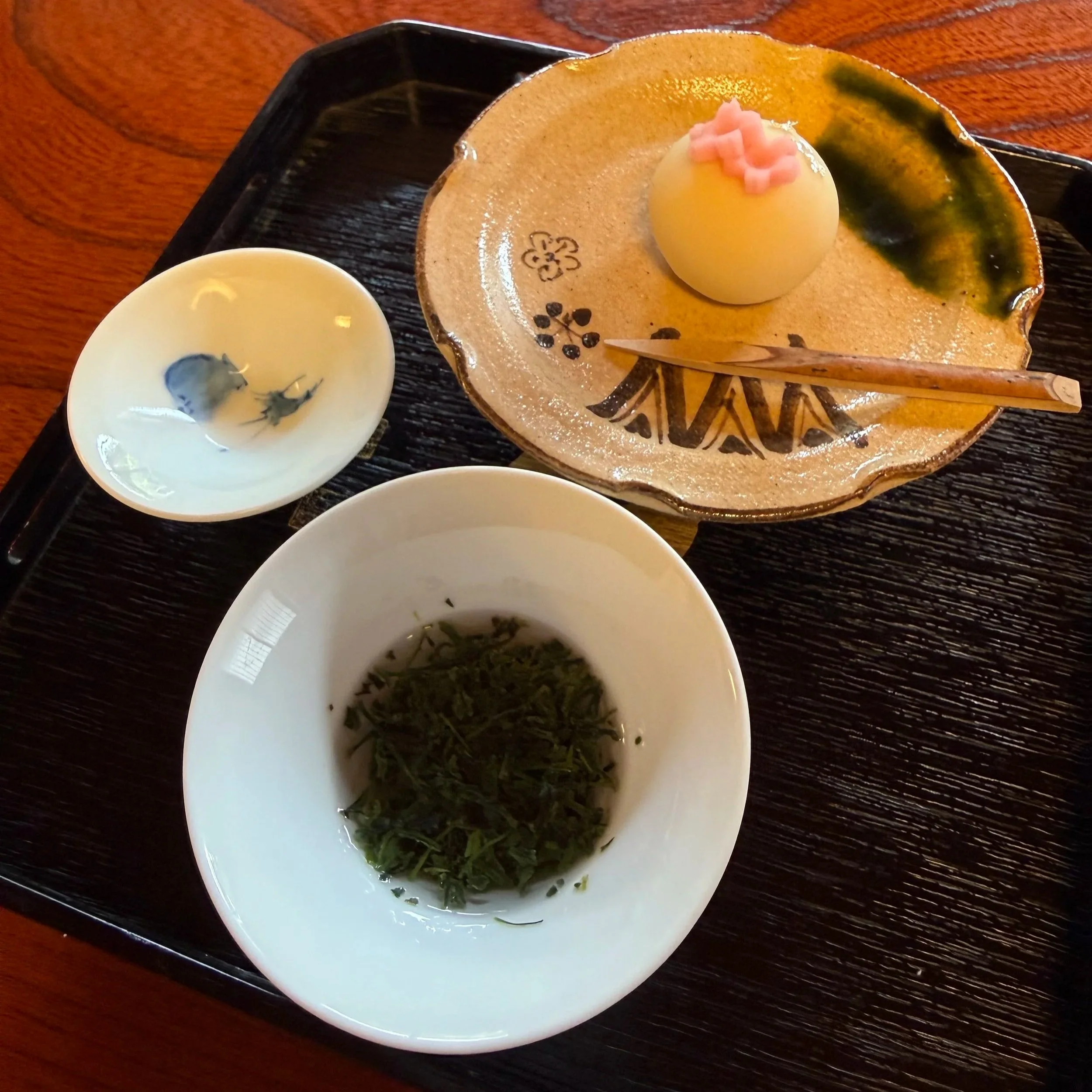
Drinking tea from this year’s first harvest.
Mrs. Kobayashi brewed for us first. She placed the dried tea in a small lidded bowl and poured room-temperature water over it. The flavor was round and mild and slightly sweet, with none of the bitterness we associate with green tea. She explained: bitterness is extracted by heat. The higher the water temperature, the more bitterness you release. In summer, she sometimes cold-brews the tea over melting ice for hours.
Then Mr. Kobayashi took us to tour their traditional Japanese tea room.
It is a small room, barely ten by ten feet. The entrance is intentionally tiny — you must bow to pass through it, and almost crawl. The ceiling is low throughout. He explained why: in the era of the samurai, it was impossible to ask a samurai to leave his sword. So the tea room was designed to make it impossible to draw one. The entrance forced every guest — samurai or servant — to bow. The low ceiling and small room made violence impossible. Status dissolved. Inside, everyone was equal.
"The tea room was the one place where what mattered was the person across from you, nothing else."
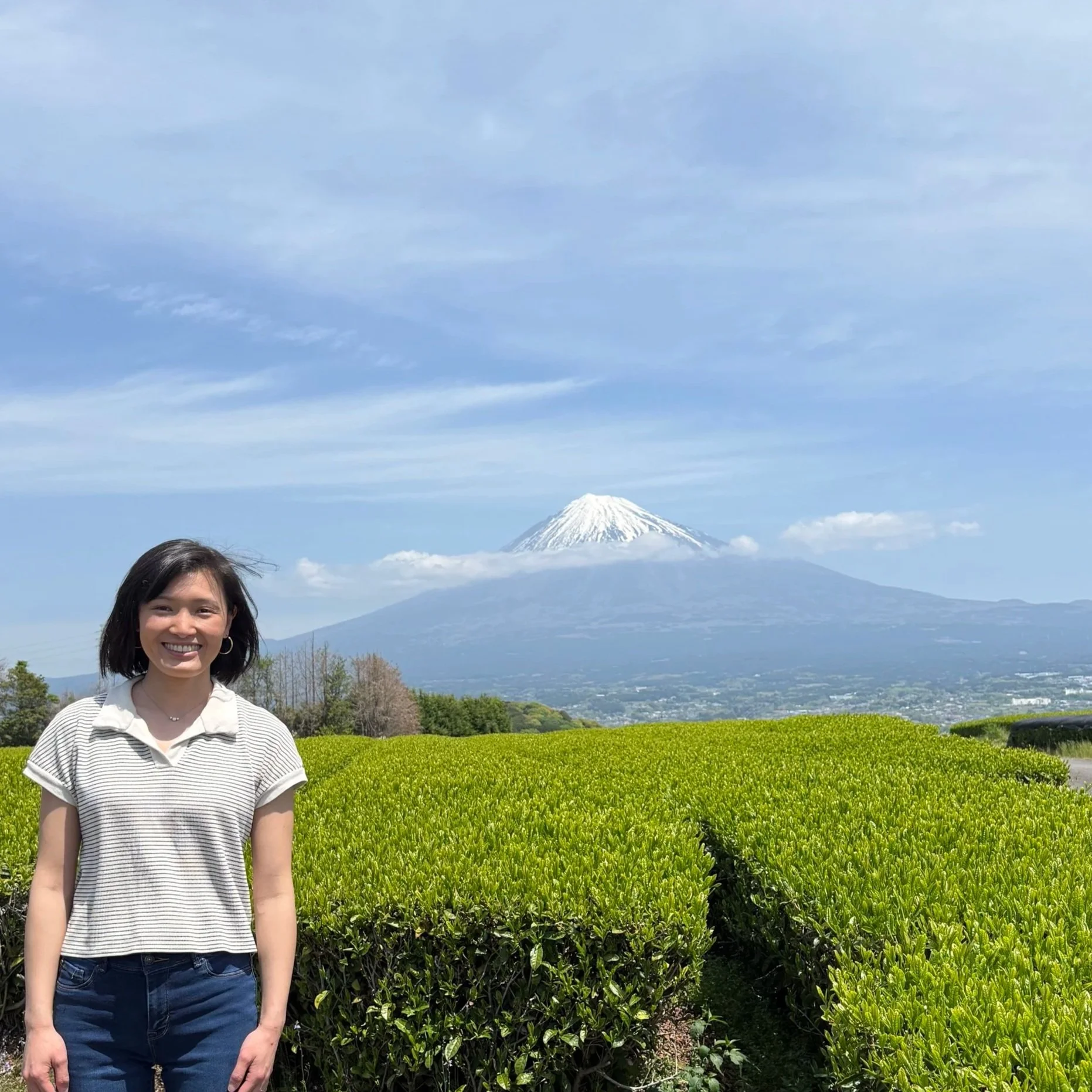
Beautiful view of Mt. Fuji from tea fields
The nature and seasonal elements are very important in Japanese Tea Ceremony. There said to be 72 seasons in the old Japanese calendar. Mr. Kobayashi made a small river run past the tea room so guests could hear moving water. Japanese maple trees frame the view from the window. A fence at the garden path marks the point where, in earlier times, attendants and servants were made to wait. Only the guests are allowed to passed through. What lay beyond the fence was a sanctuary.
Mr. and Mrs. Kobayashi’s teas have been served to Japan's Prime Minister. They were poured at a G7 summit hosted by late Prime Minister Abe — to the spouses of world leaders. He took quiet, enormous pride in this. Not in the prestige, but in the idea that his tea had created a moment of shared stillness for people who work under pressure all the time.
After the farm, Mr. Kobayashi drove us up a hillside. He said it was rare to see Mt. Fuji so clearly — the mountain is almost always hidden in cloud. That afternoon, it was entirely visible: a perfect cone above the tea fields.
A Conversation on the Bus That I Keep Thinking About
On the bus from Shizuoka to Fujiyoshida, I sat next to a woman from Asakusa, Tokyo. She was warm and friendly, happy to share stories with a stranger.
She shared how she’s seen the town getting flooded with tourist over the years. She’s happy that more people are interested in the Japanese culture and visiting this beautiful country but was also voiced concerns about local people are losing their space.
Her favorite local coffee shop is no longer her place to sip tea in peace. Prices are inflated. Grocery shops are being replaced by souvenir shops. It’s getting harder for local people to live.
It was an enlightening realization for me, and it made me fully committed to creating this retreat to highlight different parts of Japan.
People we are working with are all local tourist operators, and all of them are very passionate about sharing the culture and story of the reason they lived in.
Tomomi - a local tour operator in Izu is really passionate about bringing more people to Izu. She shares that has so much culture in history not even Japanese people know about it. When we visit there, we saw have a few people were visiting Izu compared to some places we passed by like Kawaguchiko by Mount Fuji.
A quiet location that’s been around 1200 years rich with history and culture, a perfect place for a Zen retreat. If you are someone who wants to go on the off the beaten path or support conscious tourism, I’d love to invite you on this experience.
温故知新 Mt. Fuji
We arrived in Fujiyoshida — a small city at the northern foot of Mt. Fuji — and I was immediately struck by how different it felt from the tourist-heavy spots nearby. At Kawaguchiko, just a short distance away, the area near the station was crowded with visitors. Fujiyoshida was quiet.
A local shopkeeper told me: "This is the best area to see Fuji and to experience the real spirits of the mountain. But most people don't know about us."
He's right. And that is exactly where we are going.
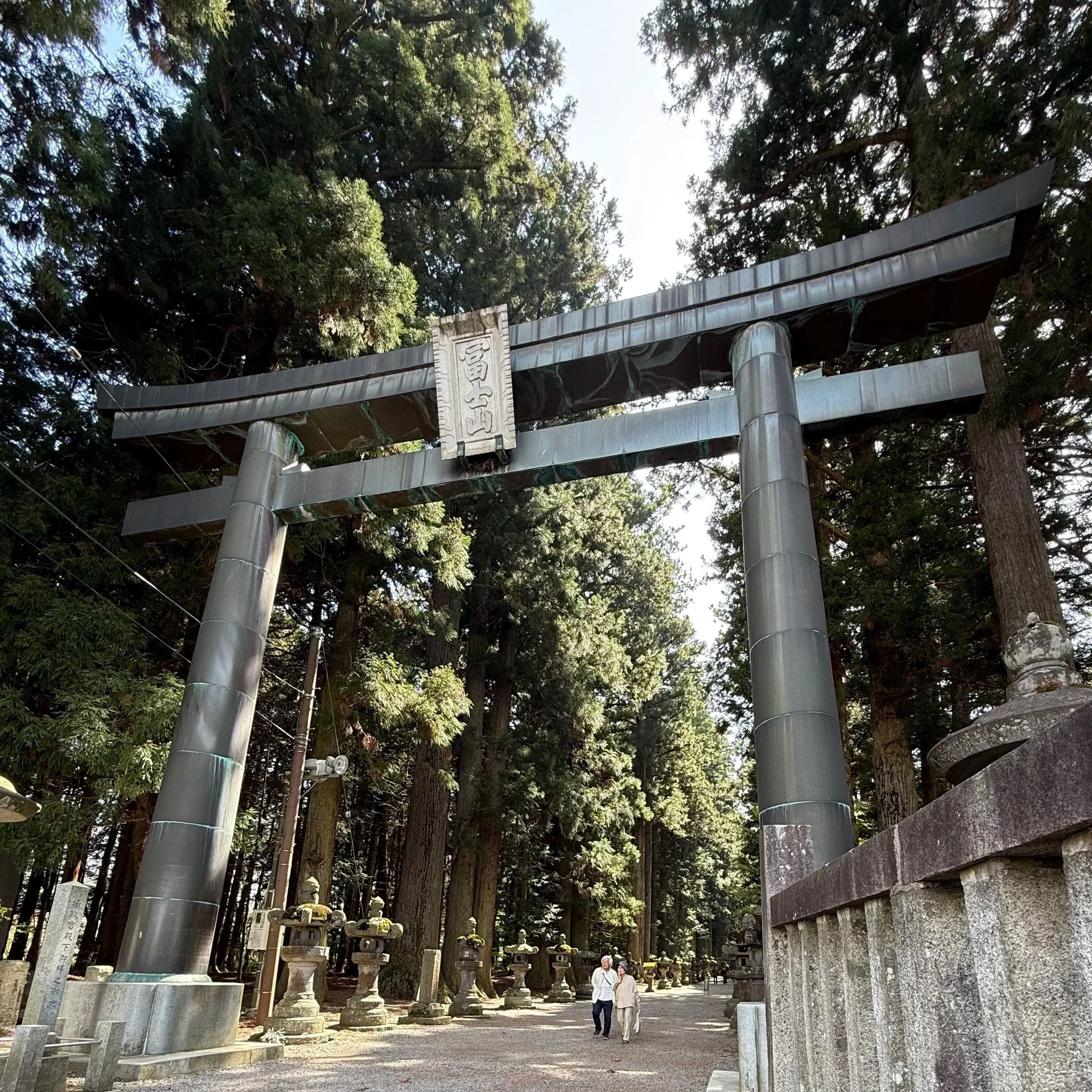
Kitaguchi Sengen Shrine surrounded by centuries old forest.
We walked the Honcho main street — the ancient pilgrimage road that leads directly toward Mt. Fuji, which you can see at the end of the street like something from a painting. Lunch was local Fujiyoshida udon, the thick, chewy specialty of the region.
Then we arrived at Kitaguchi Sengen Shrine.
I have wanted to visit this shrine for two years. I felt the power the moment I stepped through the torii gate. The shrine grounds were calm and still, despite the busy road just outside — enclosed by trees that must be several hundred years old, their roots as massive as the history they have witnessed. The contrast of that ancient green against the vermillion gate was one of the most quietly beautiful sights I have encountered anywhere.
Spiritual practice of Mt. Fuji
I decided to take a guided tour of the Mt. Fuji Ancient Trail. Our guide Alex — half Japanese, half American, with a deep knowledge of Fuji's spiritual history — led me on a walking tour that widened my understanding of the mountain.
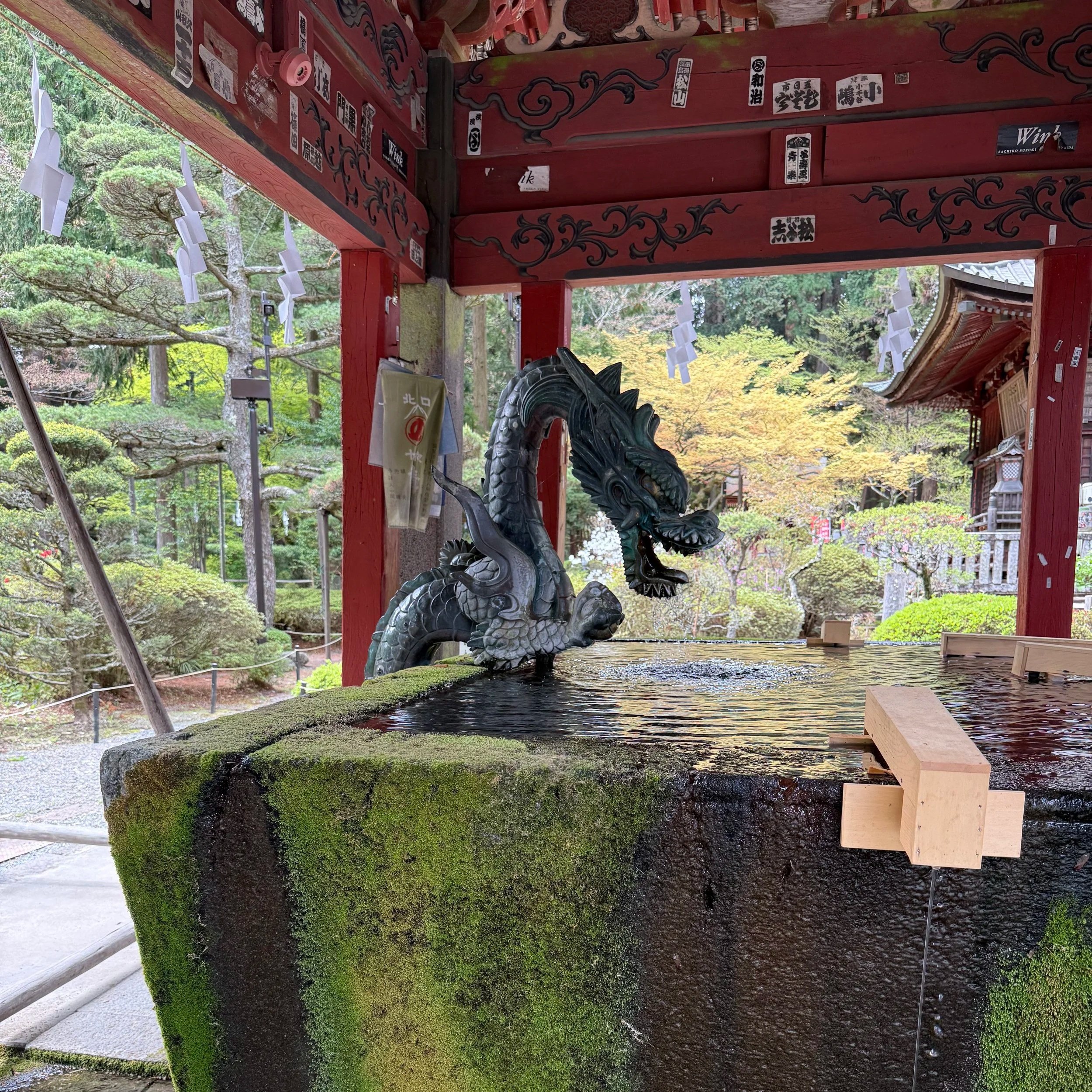
Dragons are thought to be the ruler of water.
He explained the Fujiko: the pilgrimage groups that have been summiting Mt. Fuji for centuries, wearing white robes — the clothing worn only by the dead — because the summiting Mt. Fuji was considered as a symbolic death and rebirth. He explained that the Fujiko belief system is a beautiful weaving of Shinto, Buddhism, and Shugendo (the ancient practice of mountain worship), all held together by the mountain itself as the central sacred object.
Our tour started at the Kitaguchi Sengen Shrine. He showed us the dragon carvings at the purification fountain — in ancient Japan, people believed dragons lived in water and caused thunder, so the dragon became the guardian of the sacred spring. He showed us the great Tengu mask inside the main hall — the mountain spirit of Japanese folklore, said to use magical powers to protect the pilgrims ascending to the summit.
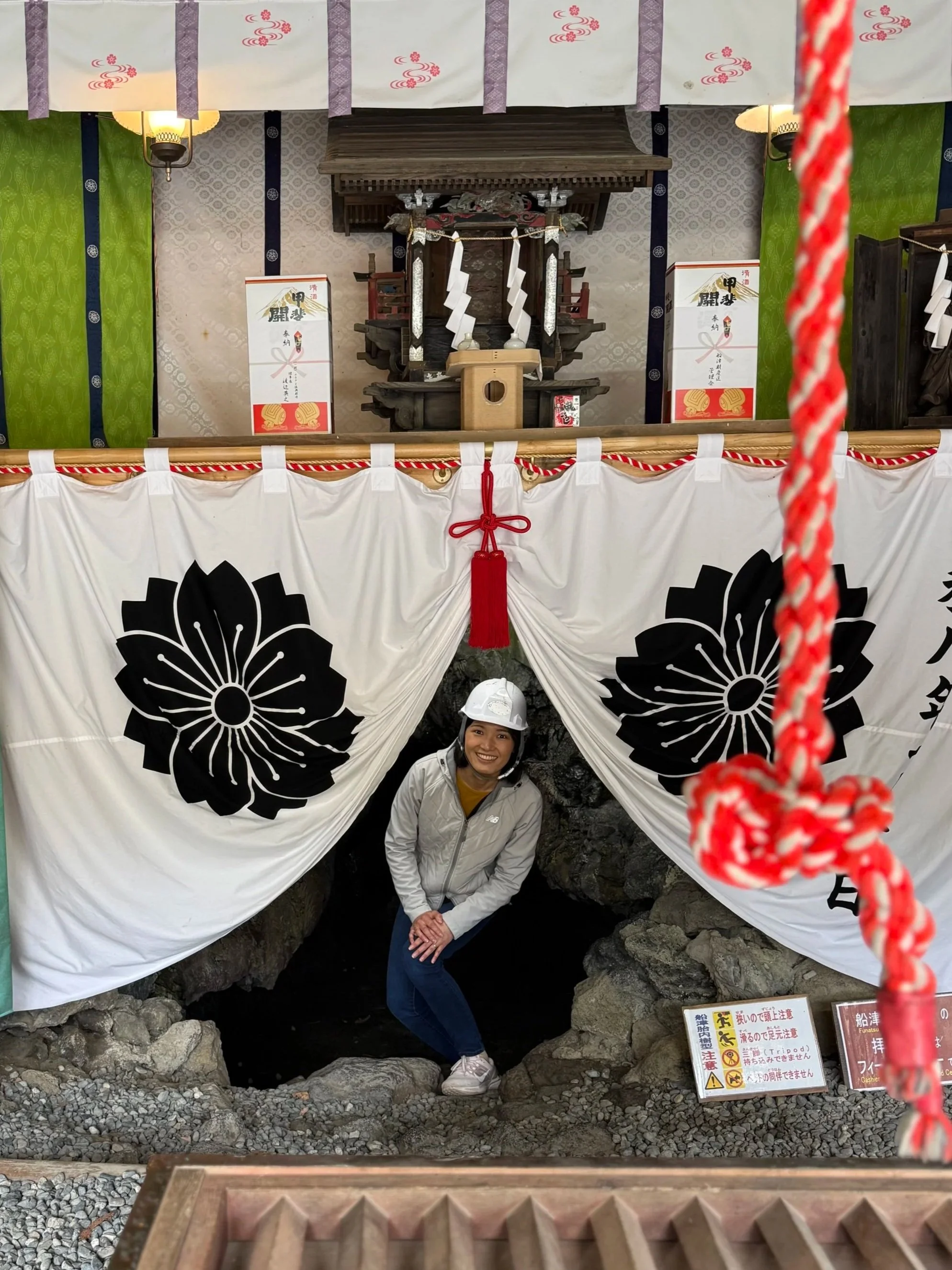
Entrance of the cave is enshrined and a sacred gate to be “reborn.”
We visited a lava cave where, for people who could not make the full ascent on the mountain, a single loop through the cave was considered spiritually equivalent to summiting. People still walk it today. I walked it — in the dark and narrow passageway, aware that for hundreds of years before me, people had walked through this same stone believing they were being reborn.
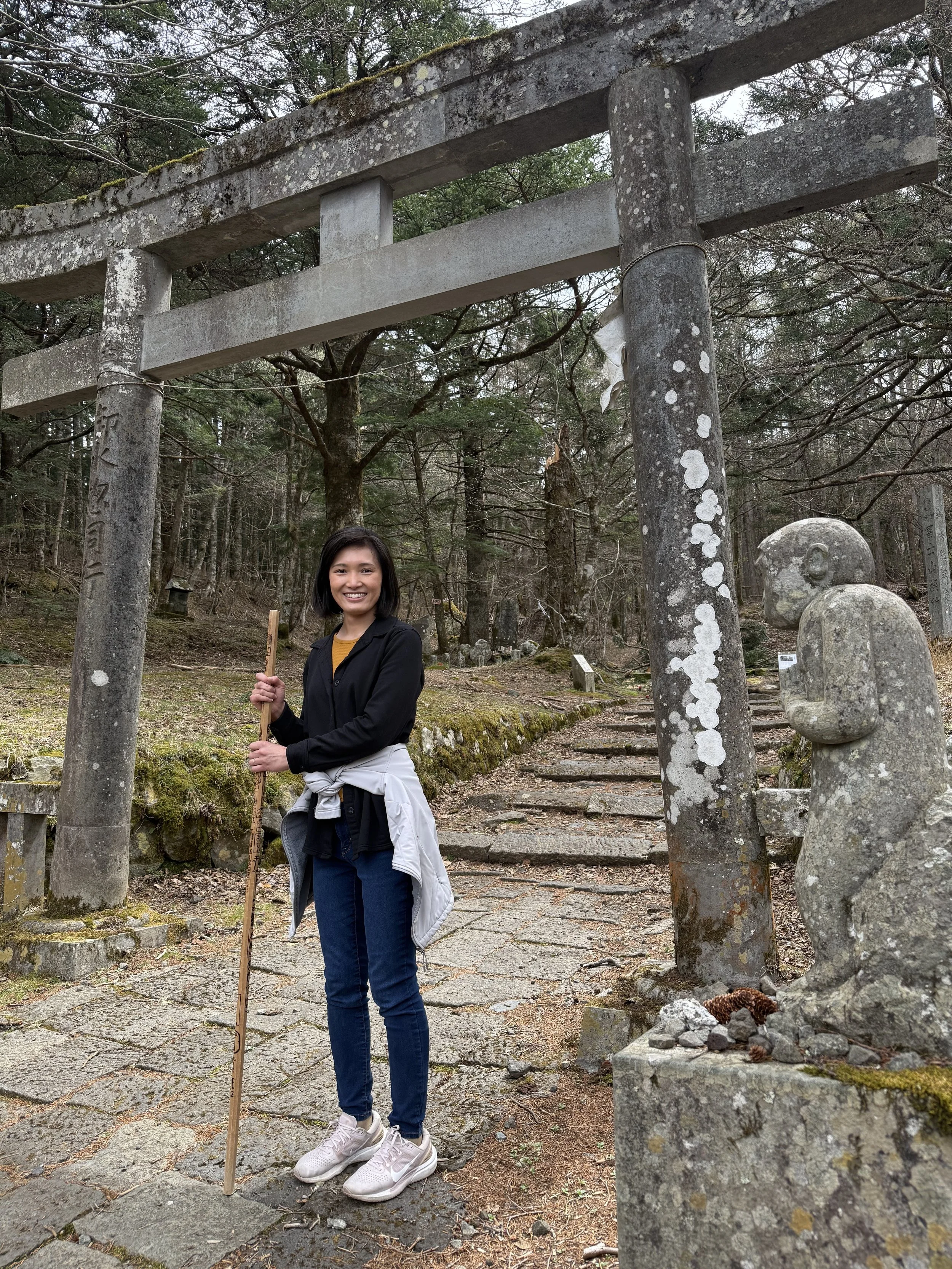
Start of the Fuji Pilgrimage.
At the start of the ancient trail — marked by a torii gate that divides the physical world from the spiritual — we found a teahouse that had fallen into ruin. Its current owner revived it after his retirement, driven by a desire to preserve and share the history of the area. He was excited to learn about our retreat. "Not many people know this place exists," he said. "I'm glad you are coming."
And then — we started from Station Zero.
Kitaguchi Sengen Shrine is the original starting point of the ancient Fuji pilgrimage. From there, in the footsteps of the Fujiko, we walked to Station One: 1,560 meters above sea level. A 20-minute walk through ancient forest, with the mountain above us and the centuries below.
I have now hiked Mt. Fuji. I will carry that with me into November.
I want to share this special experience with you.
The wasabi field and the farmer's wife sharing what she has dedicated her life. Mr. Kobayashi and his tea and his tea room filled with his quiet pride. The woman on the bus from Asakusa, who reminded me why all of this matters. The teahouse keeper on the mountain who was simply glad someone was paying attention.
Japan gives itself to those who arrive slowly, with genuine attention and respect. The places we visited, the people we met, the quality of the experiences we encountered were thoughtfully curated. It requires relationships, trust, and the willingness to go where the crowds haven't found yet.
I came back to Portland knowing something I didn't know before I left: that what we are offering in November is not a wellness retreat with a Japan backdrop. It is a genuine immersion in a living culture, guided by someone who grew up inside it — in the company of people who have dedicated their lives to keeping it alive.
Not even most Japanese people will experience what our November guests will experience.
I cannot wait to share it.
— Miho Hatanaka, RDN
Co-Founder & Owner, House Nine Wellness & Tea
Join Us For An Intentionally Curated Wellness Retreat
Join us in Shuzenji, Izu, Japan. A five-day immersion in the philosophy and practice of Japanese mindfulness — led by a guide who grew up living it.
