Why a Ryokan with Onsen Is the Ultimate Digital Detox — Cultivate mindfulness through your stay
The research on nature immersion and nervous system regulation is compelling. Shinrin-yoku (forest bathing) and Hot spring bathing have strong evidence behind it, particularly for reducing stress and improving sleep quality.
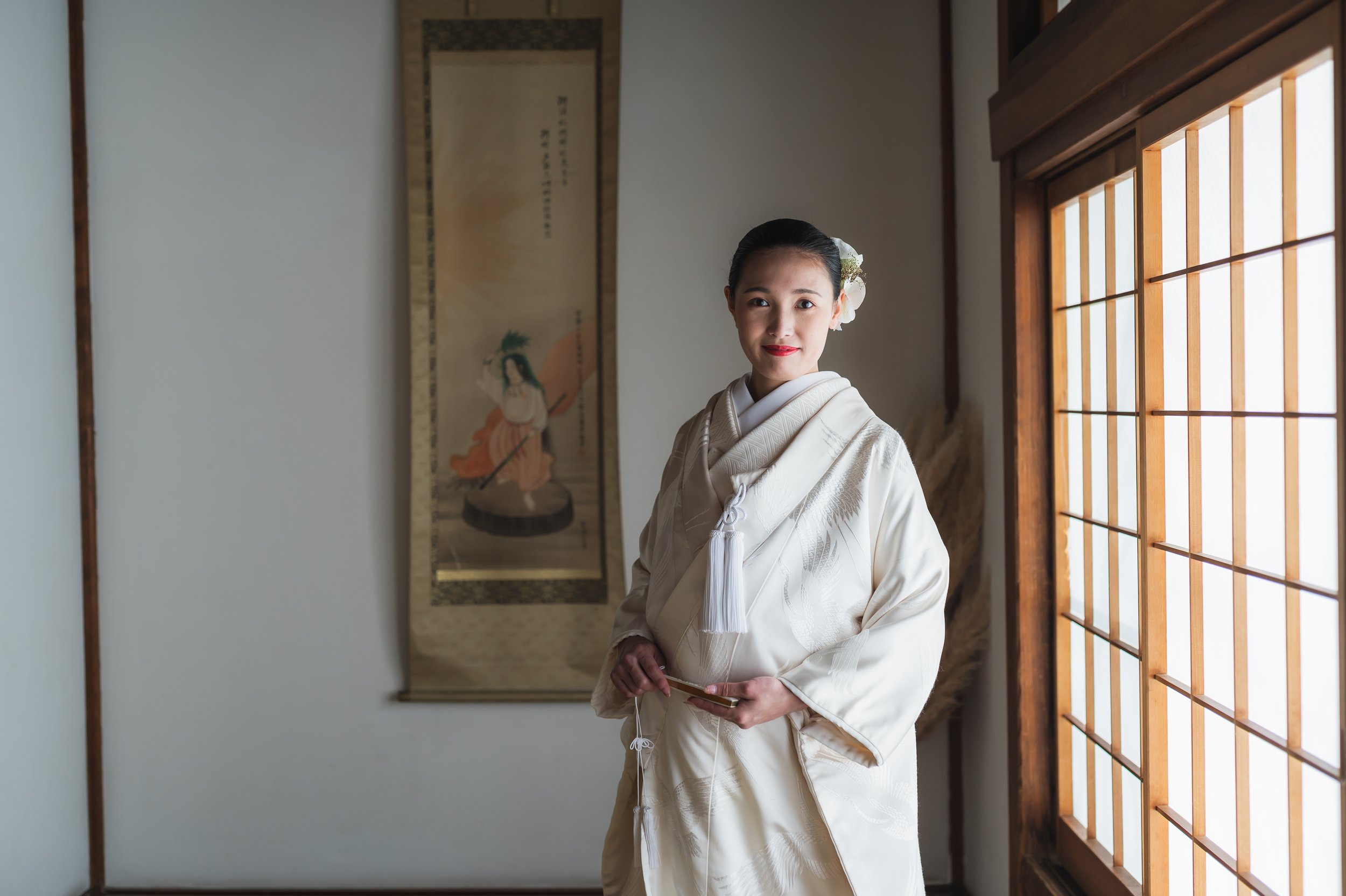
Spas and meditation apps can take you so far. Here's what happens when you go all the way.
Reading time: 6 min Category: Wellness Travel Author: Miho Hatanaka
There is a specific kind of tired that comes from being constantly reachable. It's not the tired that sleep fixes. It's the background hum of a mind that has never, in recent memory, been fully offline.
You've probably tried the solutions available to you at home. A meditation app with a streak you're quietly proud of. A yoga retreat in the mountains. All inclusive vacation on a beach. And they help — until Monday morning, when the emails start again and the mental noise returns like it never left.
What most digital detox experiences miss is this: your environment shapes your nervous system. You cannot genuinely restore in a place that looks and feels like the life you're trying to step back from.
Shuzenji, Izu - known for its natural hot springs that heals
What Makes a Ryokan Different
A ryokan (旅館) is a traditional Japanese inn — but describing it that way is like describing a kaiseki meal as "food." It undersells what happens there by about a thousand percent.
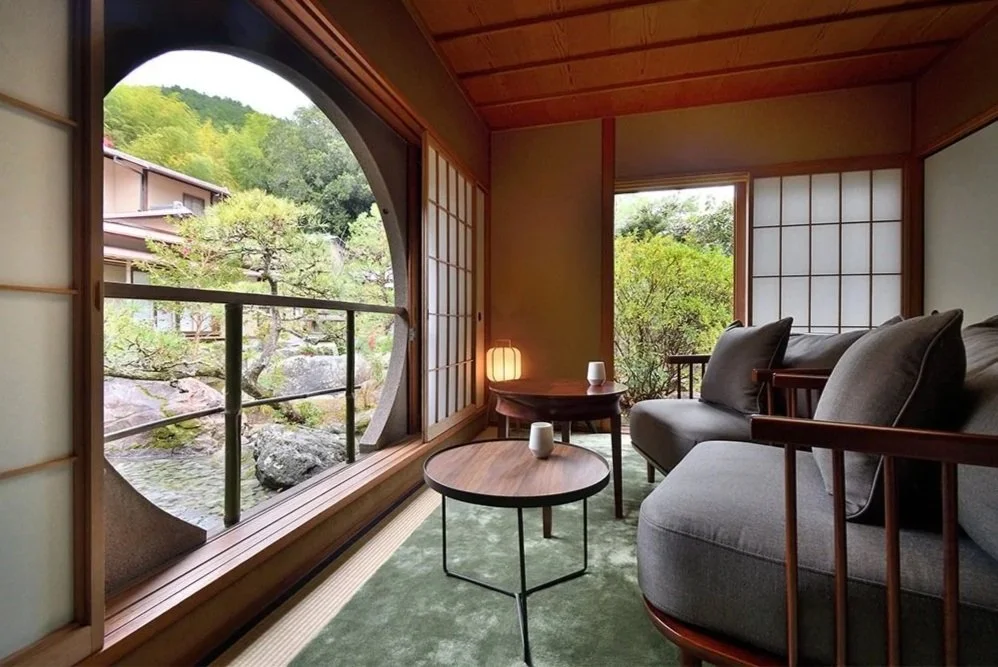
The architecture is built on intentionality: tatami floors, sliding shoji screens, circular window that peeks at meticulously tended Japanese gardens. The pace is unhurried by design and simple without clutter. Meals are ceremonial events that honor seasonality and craft. And the onsen — natural geothermal hot springs — are not an amenity. They are a daily ritual to embody, as central to Japanese wellness culture as morning shower is to ours.
When you step into a ryokan, particularly one in an authentic setting like Shuzenji in the Izu Peninsula, something shifts. The visual noise disappears. The inputs slow down. Your body — which has been in low-grade fight-or-flight for longer than you realize — begins to exhale.
"The onsen doesn't ask anything of you. It just holds you. And sometimes, that is the whole point."
The Science Behind Why This Works
The research on nature immersion and nervous system regulation is compelling. Shinrin-yoku (forest bathing), a practice developed in Japan in the 1980s and now extensively studied, has been shown to lower cortisol, reduce blood pressure, and improve mood — effects that persist for days after the experience.
Hot spring bathing (balneotherapy - treatment of disease with bathing in mineral springs) has similarly strong evidence behind it, particularly for reducing stress markers and improving sleep quality. And contemplative practices like zazen meditation — practiced in the quiet of an ancient temple rather than a WeWork wellness room — produce measurable changes in brain activity associated with calm and clarity.
Japan didn't stumble into these practices. They've been refined over millennia, specifically because they work.
What Five Days in a Ryokan Actually Does to Your Mind
Guests who have experienced extended ryokan stays consistently describe a specific progression. The first day, the mind races — reaching for the phone, mentally composing emails that don't need to be sent. By day two, something loosens. By day three or four, many people report a quality of attention they haven't felt in years: genuinely absorbed in what's in front of them, unbothered by what's back home.
This is what happens when a well-designed environment removes the triggers of distraction and replaces them with beauty, slowness, and sensory richness that genuinely captures attention.
Our Retreat: Designed Around These Principles
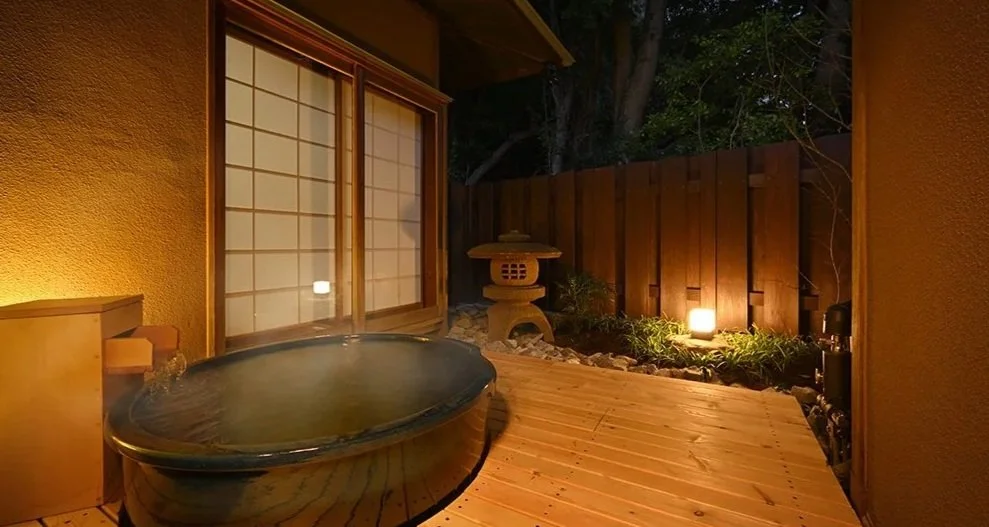
The House Nine Japan Wellness Retreat — November 9–14, 2026 — is hosted at a five-star luxury ryokan in Shuzenji, Izu, a two-hour drive from Tokyo during peak autumn foliage season. We have exclusive use of the property for our group, meaning you won't be navigating tourist crowds. Every room has its own private in-room onsen, a curated view of a Japanese garden, and western beds in traditional tatami settings.
The programming is built around the natural rhythms of the ryokan day:
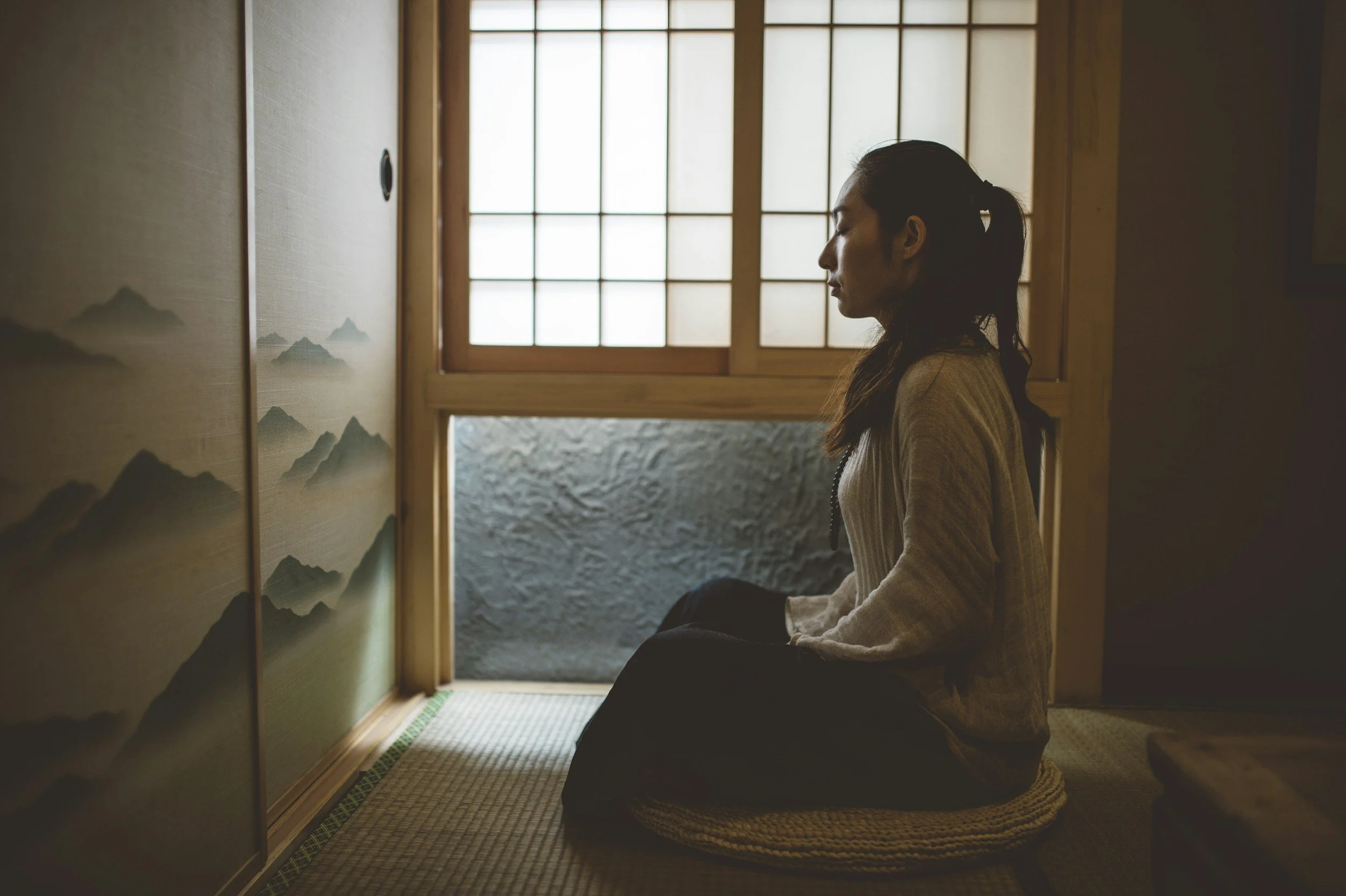
Mornings: Gentle intention-setting, zazen meditation, and unhurried Japanese breakfast
Days: Curated excursions — temple visits, Mt. Fuji foothills, Shizuoka tea fields, Shinto shrines
Evenings: Private onsen soaks, multi-course kaiseki dinners, and reflective journaling
There is no hurried schedule, no competitive energy, no pressure to perform wellness, only to experience them. The retreat is designed to be spacious — to give you room to actually drop in.
Who Makes the Most of This Experience
The guests who get the most from this retreat are typically people in their late 30s and 40s who work hard, travel well, and know the difference between a luxury vacation and genuine restoration. You may be living in a busy environment like San Francisco, Seattle, New York, Singapore, Sydney, London, and Taipei. They've been to Japan before, or they've always wanted to go — but they want to experience the country slowly, with a guide who knows it from the inside.
They will come home after the experience; restored and learning new ways to incorporate mindfulness in daly lives.
Reset your nervous system at our Ryokan.
Five days. A luxury ryokan. Private onsen. Japan in peak autumn. A small, intentional group. November 9–14, 2026 — spots are limited to 9 rooms.
What Is Wabi-Sabi — And Why Burnt-Out Professionals Need It
Burnout isn't just exhaustion. Researchers increasingly describe it as a crisis of meaning — a disconnect between who you are and what your days actually look like.
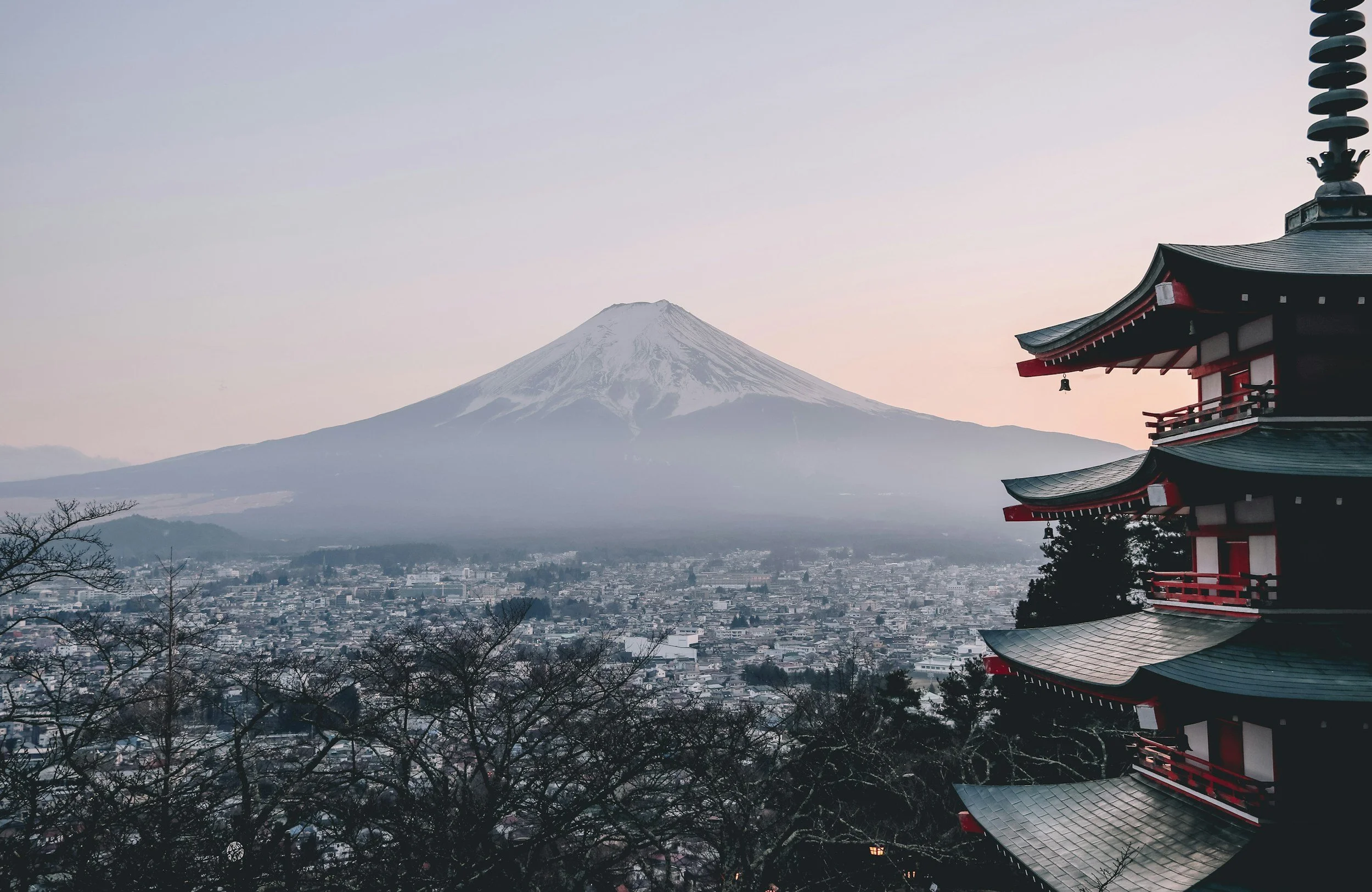
The ancient Japanese art of finding peace in imperfection might be the burnout antidote modern life has been missing.
Reading time: 7 min Category: Wellness Philosophy Author: Miho Hatanaka
You've navigated the New Year, almost done with the first quarter. Perhaps managed a team through a restructure. Grown a business while somehow keeping everything else together. You are, by every external measure, doing great.
And yet — something feels off. The tiredness isn't the kind that a long weekend fixes. The mental noise doesn't quiet down just because your calendar clears. You keep thinking: there has to be something to stop this hamsterwheel.
The Japanese have a word — or rather, a worldview — that might help explain both what's missing and where to find it.
Shuzenji, Izu - known for its natural hot springs that heals
What Is Wabi-Sabi?
Wabi-sabi (侘び寂び) is one of Japan's most enduring aesthetic and philosophical concepts. At its heart, it is the art of finding beauty in imperfection, transience, and incompleteness.
A cracked ceramic cup mended with gold. A moment of silence between two people that says more than words.
In a culture built on optimization — flawless presentations, perfect productivity systems, curated social feeds — wabi-sabi is a quiet act of surrender to the unknown.
"Wabi-sabi invites you to stop performing life and start experiencing it — fully, imperfectly, and present."
“What if you stopped trying to fix what isn’t broken? What if the worn edges are exactly what makes something precious?”
Why This Philosophy Speaks Directly to Burnout
Burnout isn't just exhaustion. Researchers increasingly describe it as a crisis of meaning — a disconnect between who you are and what your days actually look like. High-achieving professionals (project managers, small business owners, founders) are disproportionately affected, not because they lack resilience, but because they have poured so much of their identity into output.
Wabi-sabi doesn't offer a productivity hack. It offers something more radical and a bit scary: permission to be still. To find value in the unfinished or even broken. To stop measuring your worth by what you produce.
Paired with ichigo ichie — the magic deepens.
Ichigo ichie (一期一会) translates roughly as "one time, one meeting" — the understanding that this precise moment, this particular conversation, this exact view of autumn light through a bamboo grove, will never happen again. Rather than rushing past it toward the next task, ichigo ichie invites you to receive it fully.
Together, wabi-sabi and ichigo ichie form a philosophy of radical presence. They don't ask you to become someone different. They ask you to notice what's already here.
You Can't Learn This From a Book — You Have to Live It
These concepts don't fully land as intellectual ideas. They land in the body — soaking in a stone onsen while rain falls on a Japanese garden. Walking slowly through a bamboo forest with no agenda. Sitting in silence with a zen monk and a bowl of freshly prepared matcha.
Japan, specifically its quieter rural landscapes — the Izu Peninsula, the foothills of Mt. Fuji, the tea fields of Shizuoka — is one of the few places in the world where these philosophies are woven into the architecture, the food, the pace of daily life. They aren't museum pieces. They are lived, every day.
What a Wabi-Sabi Retreat Actually Looks Like
This November, House Nine Wellness is hosting a small-group mindfulness retreat in Shuzenji, Izu — a place known as "Little Kyoto" and one of Japan's most treasured wellness destinations. Led by Miho Hatanaka, who was born and raised in Japan and has spent past seven years building Portland's most beloved wellness studio, the retreat is designed to immerse you in these philosophies — not explain them.
Over five days, you will:
Practice zazen (seated Zen meditation) with a local monk inside an ancient temple
Soak in mineral-rich natural hot springs — your room has its own private onsen
Walk the tea fields of Shizuoka and participate in a traditional matcha ceremony
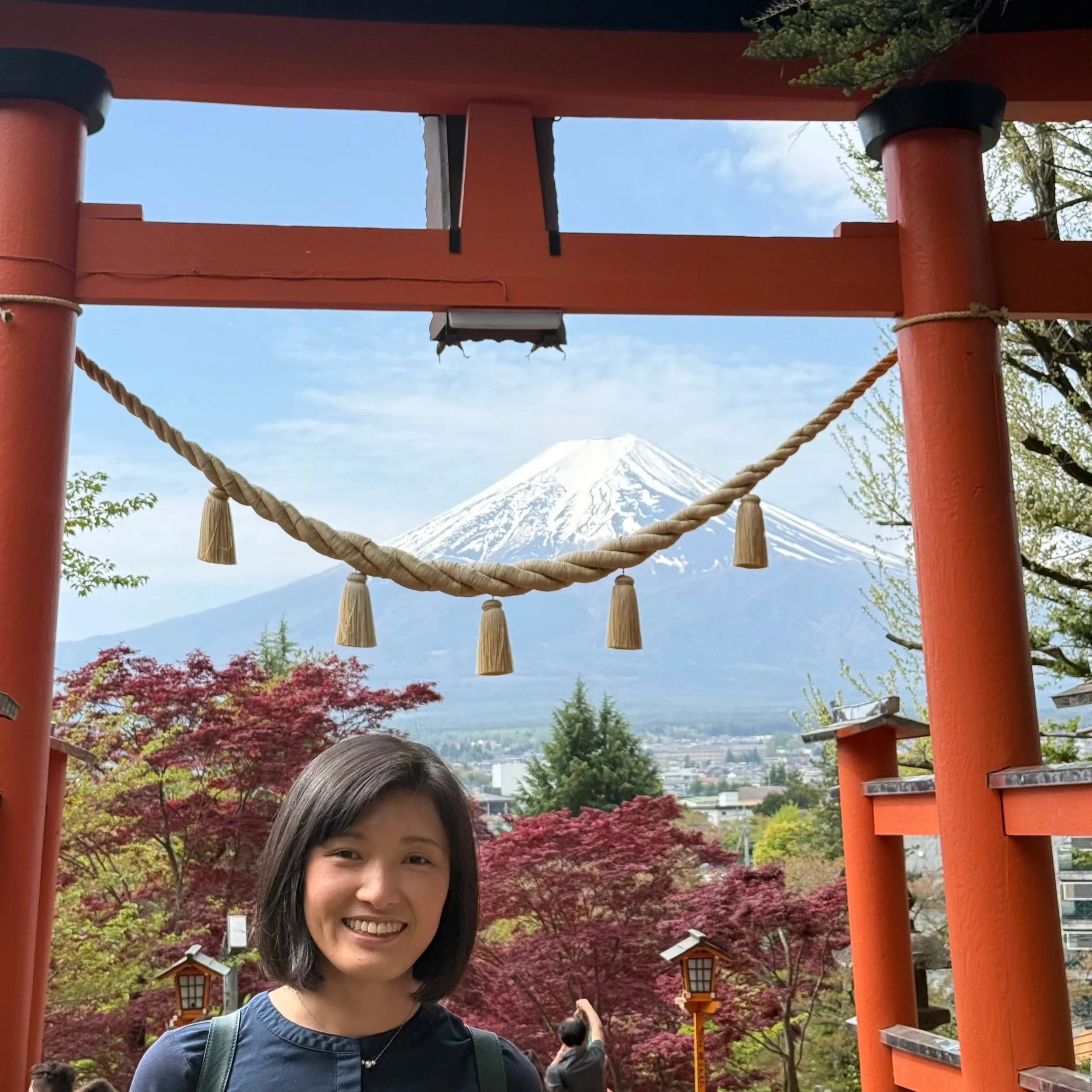
Hike near Mt. Fuji and explore its deep roots in Shinto spiritual practice
Slow down over multi-course kaiseki meals that honor seasonal, regional ingredients
None of this is rushed. None of it is optimized. It is, by design, the opposite of your normal week.
Who This Is For
This retreat was designed for people who are high-functioning but quietly depleted — professionals and business owners in busy cities like Seattle, San Francisco, New York, who have built meaningful lives but feel an increasing need to reconnect with something deeper. If you've been on a yoga retreat and found it too surface-level, or travelled to Japan before but moved too fast, this experience is for you.
The group is intentionally small — only 9 rooms — to preserve the intimacy and quality of each experience.
Ready to experience wabi-sabi for yourself?
Join us November 9–14, 2026 in Shuzenji, Izu, Japan. A five-day immersion in the philosophy and practice of Japanese mindfulness — led by a guide who grew up living it.